Buyers Guide: Best Gym Door Access Control
Guides
December 1, 2025
The fitness industry is more competitive than ever, with gym owners seeking new ways to enhance security, streamline operations, and elevate the member experience. A modern access control system has evolved from a simple lock into a strategic tool for growth and efficiency. This shift is reflected in the market's rapid expansion; the Electronic Access Control Systems Market was valued at USD 44.32 Billion in 2023 and is expected to reach USD 106.68 Billion by 2032, according to SNS Insider. This guide is designed for operators of 24/7 gyms, boutique studios, and membership clubs who need to select a robust, future-proof entry system. We will explore the fundamentals of gym access, compare critical software and hardware, and review leading vendors to help you make an informed investment.
Gym Access Control Systems: Complete Guide to 24/7 Door Entry, Check-In & Security
A gym access control system is an integrated solution of hardware and software that automates and secures entry into a fitness facility. It acts as a digital gatekeeper, granting or denying access based on a member's credentials, membership status, and predefined schedules. This guide is crafted for fitness business owners—from 24/7 chain operators to boutique studios—who aim to secure their premises, reduce staffing overhead, and provide flexible access for members. We will look at different types of gym access software. We will explore key features of 24-hour gym management platforms. We will also analyze top vendors like KisiProdatakey. This will help you pick the right security system for your needs.
What Is a Gym Access Control System (vs a Gym Check-In System)?
At its core, an access control system is the technology that governs who can enter a facility, when they can enter, and through which doors. It combines physical hardware, such as electronic door locks and credential readers, with intelligent software that processes access requests against a database of permissions. This is fundamentally different from a basic gym check-in system, which typically involves a staff member manually verifying a membership and logging the visit.
While a check-in system tracks attendance, a true access control solution physically enforces entry rules. For 24/7 or unstaffed gyms, this distinction is critical. In these places, the access system does more than track attendance. It is the main security system. It protects assets, keeps members safe, and stops revenue loss from unauthorized access.
How Gym Door Access Systems Work (Hardware + Software)
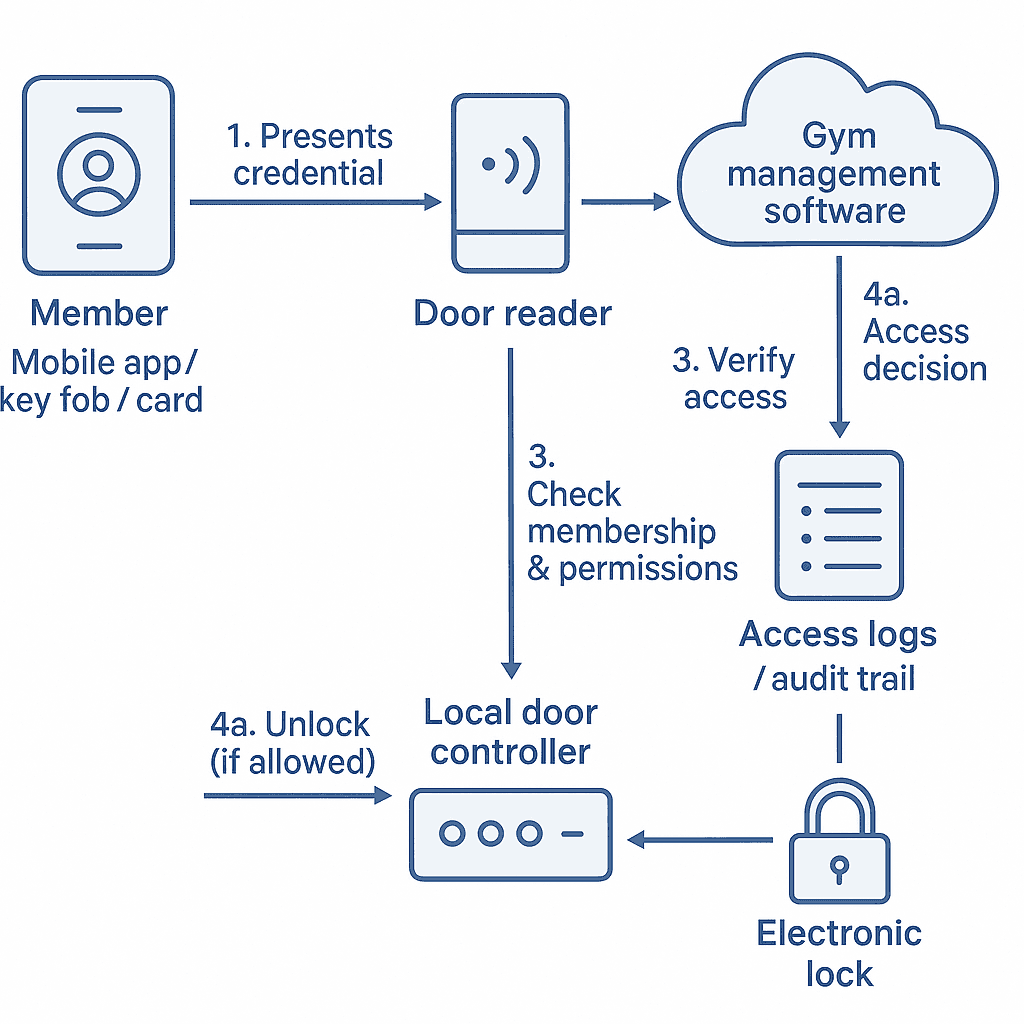
The gym access control process: A member's credential is scanned, verified by cloud software, and access is granted or denied in seconds.
A modern gym door access system operates through a seamless interaction between hardware components and a central software platform. The process is straightforward and efficient:
A member presents a credential—such as a mobile app, key fob, or card—to a reader at the entrance.
The reader transmits this data to a controller, a small device that serves as the local brain of the control system.
The controller communicates with the gym's management software, which is typically cloud-based, to verify the credential against the member's profile and permissions (e.g., active membership, correct time of day).
If the permissions are valid, the software instructs the controller to release the electronic lock, granting entry. The event is recorded in the system's access logs for auditing.
Crucially, if the internet connection fails, most modern controllers use cached permissions to continue operating, ensuring members are not locked out.
Access Methods: Gym Access Apps, Key Fob Systems & Membership Cards
Choosing the right access method is vital for both member experience and security. While traditional methods remain popular, the industry is shifting toward more advanced solutions.
Mobile Credentials (Gym Access App): Using a smartphone for keyless entry offers superior convenience and security. Members almost always have their phones, and digital credentials can be issued or revoked instantly. This method eliminates the costs associated with replacing physical fobs or cards.
RFID Key Fobs & Cards: These durable tokens are reliable and simple to use. However, they can be lost, forgotten, or intentionally shared, creating security gaps. Deactivating a lost fob requires manual administrative action.
PIN Code: Keypads offer an alternative to physical credentials, but a PIN Code is easily shared and provides a lower level of security. They are best used for secondary access points or in conjunction with another credential type.
Biometric Access: Methods like fingerprint scans or facial recognition offer the highest level of security, as they verify a unique physical trait. The global Biometric Access Control Systems market is forecast to grow by USD 6.41 billion between 2024 and 2029, as noted by Technavio. However, the higher cost of readers and potential member privacy concerns are important considerations.
24/7 Gym Access Control Systems & Security Policies
Running a 24/7 or unstaffed gym brings big security challenges. These include theft, liability problems, and unauthorized access through tailgating. A robust access control system is the first line of defense, equipped with features designed specifically for these environments. Key features include anti-passback. This stops a credential from being used to enter twice without scanning an exit. Tailgating alerts notify management when many people enter with one credential.
However, technology alone is not enough. Security policies must support these features. They include full video surveillance with clear security cameras. There should be enough outside lighting and easy-to-reach panic buttons. A detailed plan for responding to incidents is also needed.
Geo-Restrictions, Anti-Passback & Advanced Security Features
Advanced security features transform a basic entry system into a powerful management tool. Anti-passback is a critical function that combats "buddy punching" by requiring members to scan out before they can scan back in, preventing a single credential from being passed to a friend. For mobile credentials, geofencing is a strong tool. It makes sure a member's phone is near the door reader before unlocking. This stops remote sharing from happening.
A smart access control system protects the admin side. It uses features like IP and location limits for staff accounts. It also has two-factor authentication for sensitive tasks. The system sends alerts for unusual access, like many failed login attempts.
Gym Door Entry Systems, Turnstiles & Lock Options
The physical hardware is a critical component of your access control system. The right choice depends on your desired balance of security, traffic flow, and budget.
Electromagnetic Locks (Maglocks) & Electric Strikes: These are common for standard doors. Maglocks provide high security, while electric strikes are often easier to install. It is crucial that main exit paths are "fail-safe," meaning they unlock automatically during a power outage to comply with fire codes.
Smart Locks: These all-in-one units are suitable for single-door applications like a private studio but may not scale well for larger facilities with multiple entry points.
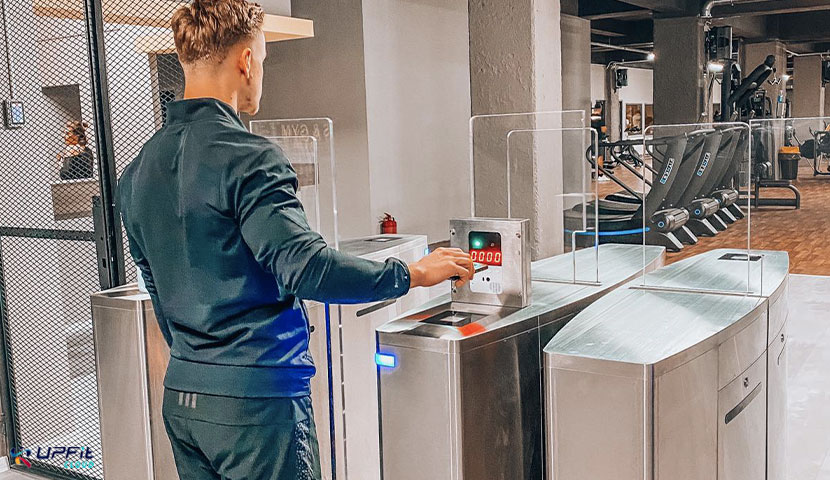
Turnstiles & Gates: For high-traffic 24/7 gyms, turnstiles are the most effective solution for preventing tailgating. They create a physical barrier that ensures only one person can enter per valid credential scan, significantly enhancing security in unstaffed environments.
Cloud-Based vs On-Premise Gym Access Control Software
The management software that powers your system can be hosted either on-premise or in the cloud. Traditional on-premise systems require a dedicated server and IT staff for maintenance and security. In contrast, cloud-based access control, offered by leading vendors, hosts the software on remote servers managed by the provider.
This model gives most gyms many benefits. It allows remote management from any device. The software updates automatically. It improves data security. It also grows easily without needing on-site IT equipment. For these reasons, cloud-based systems have become the standard for modern fitness facilities.
Gym Software With Door Access & Integrated Check-In
The true power of an access control system is realized when it integrates with your gym management software (GMS). This connection automates the entire member lifecycle. When a member signs up, the GMS can automatically create and issue access credentials. If a payment fails, their door access is instantly suspended.
Membership freezes, class-only access, and expirations are all handled automatically, removing manual administrative work. This seamless flow reduces labor costs and frees up staff to focus on member engagement. These integrations typically use direct API connections or webhooks to ensure real-time synchronization between billing status and physical gym access rights.
Best Gym Access Control Systems: Kisi & Prodatakey (PDK)
Several vendors lead the market in cloud-based access control for fitness facilities.
Kisi: A modern, cloud-based platform known for its strong mobile access capabilities and user-friendly interface. Kisi is well-suited for gyms prioritizing a seamless member experience with features like mobile unlock, granular scheduling, and detailed analytics. Its robust API makes it highly adaptable for integrations.
Prodatakey (PDK): As a cloud-first provider, PDK offers a highly flexible and scalable solution. Their system is built around a range of controllers that can manage anything from a single door to an entire enterprise, providing a powerful mobile app for both administrators and users.
Key Fob System for Gym Cost & Other Pricing Factors
The total cost of a gym access control system has several parts. These include hardware like readers, controllers, and locks. It also includes professional installation work. Software subscriptions are needed, usually a monthly or yearly fee per door for cloud platforms. The cost of credentials is also part of the total. A complete mobile access control solution can range from "$1,000–$2,500 per door for installation", plus ongoing software fees.
While this represents an upfront investment, the return on investment (ROI) is substantial. Offering 24/7 access can attract new members, justify premium membership tiers, and dramatically reduce staffing costs, quickly offsetting the initial expense.
Pros and Cons of Mobile, Fob, Card, PIN & Biometric Gym Access
Credential Type | Convenience | Security | Sharing Risk | Recovery | Hardware Cost |
|---|---|---|---|---|---|
Mobile App | Very High | Very High | Very Low | Instant | Low (uses member's phone) |
Key Fob | High | Medium | Medium | Manual Deactivation | Low per member |
Card | High | Medium | Medium | Manual Deactivation | Low per member |
PIN Code | Medium | Low | Very High | Change Code | Medium (keypad cost) |
Biometrics | Very High | Highest | None | Re-enroll | High per reader |
Modern mobile credentials from leading vendors exemplify app-based access. While biometric access offers the highest security, the cost and potential privacy concerns can make it a less practical choice for smaller operators.
Implementation Checklist for a 24/7 Gym Door Access System
Deploying a new access system requires careful planning. Follow this step-by-step checklist for a smooth rollout:
Audit & Plan: Identify all doors requiring controlled access and assess existing wiring.
Select Hardware: Choose the appropriate readers, controllers, and electronic locks for each door.
Choose a Platform: Select a cloud-based software provider that meets your integration and feature requirements.
Design Rules: Define access schedules (e.g., 24/7 for premium members) and user groups.
Integrate: Connect the access control platform with your gym management software to automate permissions.
Test Thoroughly: Before going live, test all credentials, hardware, and integration workflows.
Train & Launch: Onboard your staff and inform members about the new system.
How to Choose the Best Gym Access Control System for Your Club
Selecting the right access system requires a strategic assessment of your unique needs. Use this framework to guide your decision:
Operational Model: Is your gym fully staffed or unstaffed 24/7? Unstaffed models demand higher security features like turnstiles and integrated video surveillance.
Scale: Are you securing a single studio or multiple locations? Cloud-based platforms excel at managing multi-site operations from one dashboard. With approximately 20.6% of the U.S. population belonging to a gym, scalability is key to capturing your market.
Budget: Balance upfront hardware and installation costs with the long-term ROI from reduced staffing and increased revenue.
Integrations: Does the system integrate seamlessly with your existing gym management software? This is non-negotiable for automated operations.
Future-Proofing: Choose a system with an open API that can adapt to future technologies and member expectations.
FAQs About Gym Access Control, Door Entry & 24 Hour Gym Management Software
Can I run a fully unstaffed 24/7 gym? Yes, it is possible with the right technology. A fully unstaffed gym requires a highly reliable cloud-based access control system, ideally paired with turnstiles or tailgating alerts to prevent unauthorized access. You should also have comprehensive video surveillance and clearly marked, easily accessible panic buttons to ensure member safety.
What happens during an internet outage? Modern access control systems are designed for resilience. The door controllers store a cached version of user permissions locally. If the internet connection is lost, the controller will continue to grant or deny access based on the last synchronized data, ensuring uninterrupted operation for your members.
Can I mix key fobs and mobile access? Most modern systems are credential-agnostic, allowing you to issue mobile credentials, key fobs, and physical cards all within the same platform. This flexibility lets you cater to different member preferences and create tiered access levels.