How Much Does It Cost to Open a Gym?
Pre-Launch
November 6, 2026

Build Your Own Budget
How much does it cost to open a gym? It depends on the type of gym, the unit and how you staff it.
One UK trainer costed a second-hand personal training (PT) studio set-up at £4,995. An illustrative model for a staffed 5,000 sq ft gym reaches a start-up subtotal of £300,500 to £600,500, before working capital.
The published UK estimates don't agree, so don't plan around one headline figure. Build yours from rent, fit-out, equipment, staff, tax and working capital.
At Gymflow we build gym management software. Here you'll get the 2026 UK rates, five real owners' figures, worked budgets for a studio and a staffed gym, and the US equivalents. It's written for new gym owners who'd rather trust their own numbers.
Contents
Why Gym Startup Costs Have No Single Average
The Three Parts of a Gym Startup Budget
One-Off Costs of Opening a Gym
Monthly Costs to Run a Gym
How VAT Changes Your Numbers
What Two UK Gym Owners Spent
Costs by Type of Gym
Funding a New Gym and Building a Profitable Business
If You're Opening in the US
FAQ: Gym Startup Costs
Cost Your Own Gym Before You Sign
Why Gym Startup Costs Have No Single Average
Search the question, or ask an AI tool, and you'll get a confident headline figure. They don't agree, and most come from companies selling something.
REPs Fitness, an equipment brand, puts a small independent gym at £30,000 to £70,000. A Grove HR guide puts a 2,000 to 4,000 sq ft gym at £100,000 to £200,000. Neither guide sets out the same specification, so you can't average them. As a business owner, you need your own numbers.
Four things change the answer for any fitness business more than anything else:
Fit-out scope. Contractor claims run from £30 to £200 per sq ft, so price your own specification.
Rateable value. The £12,000, £15,000 and £51,000 thresholds change your business rates bill in England.
Headcount. Each full-time employee on the National Living Wage costs about £24,785 a year in wages alone, before National Insurance and pension.
Revenue against the £90,000 VAT threshold. Crossing it changes what you keep from gym memberships.
The Three Parts of a Gym Startup Budget
Split your budget into three parts, because mixing them hides how long your cash has to last.
One-off start-up capital: the deposit, legal fees, fit-out, gym equipment, safety work and launch marketing, all paid before opening day.
Working capital: the ramp-up months, when membership income doesn't yet cover your costs and you're still working to attract new members.
The running cost base: rent, business rates, staff, music licensing, energy, insurance, software, payment fees, equipment maintenance and marketing expenses.
Put all three in your business plan before you start a gym. Then work out your break-even number. Divide your monthly fixed costs by what each member leaves you after VAT (if you're registered) and payment fees.
If you need 633 members to cover your costs and your town already has three low-cost gyms, you know the plan needs work before you sign a lease. Our guide to knowing your gym's numbers picks this up once you're trading.
One-Off Costs of Opening a Gym
Most up-front costs depend on the unit you choose, so the premises decision comes first.
Premises, Deposit and Legal Fees
Area drives your rent, your rateable value, your fit-out bill, your energy use and even your music licence band. Our guide to choosing the right gym location covers how to compare units.
In one PT trainer's costing, most landlords want two to three months' rent up front. One gym owner advises budgeting at least six months' rent for a first site. That same owner paid about £2,000 to £3,000 in legal fees in 2019 and says he'd budget £4,000 to £5,000 in 2026.
Fit-Out and Gym Equipment
Most published fit-out figures are contractor claims, and they're wide. One contractor claims £30 to £55 per sq ft for a basic functional fit-out, £55 to £90 for mid-range and £90 to £150 or more for a premium health club. Another claims £80 to £200 per sq ft for commercial gyms.
Use them as a sense-check only, and get at least two quotes for your own specification. Ask every contractor to confirm changing rooms, showers, ventilation and flooring as separate lines.
Equipment is the line you control most directly, so decide what the gym floor needs first. Leasing lowers start-up capital but adds a monthly cost for years, which pushes your break-even number up. Second-hand kit keeps both down, if you're happy to inspect it and budget for repairs.
Planning and Fire Safety Checks
In England, indoor sport, recreation or fitness sits in Use Class E(d). Moving into a unit already in Class E normally needs no planning permission, as long as no planning condition or section 106 obligation prevents it.
That condition is the trap. In a 2026 Ribble Valley enforcement appeal, an Inspector upheld a notice requiring a gym to stop operating in a Class E unit, because a 2021 planning condition restricted the use.
Under the Regulatory Reform (Fire Safety) Order 2005, which covers England and Wales, the responsible person must carry out and regularly review a fire risk assessment. GOV.UK's fire risk assessment guidance says to appoint a competent person if you lack the expertise.
Monthly Costs to Run a Gym
These lines repeat every month. Several are set by law, and most changed in 2025 or 2026.
Business Rates in England
In England, a single property with a rateable value of £12,000 or less pays no business rates, and relief tapers to zero at £15,000.
That's the relief for small businesses, and you claim it from your local council. Gyms qualify for the lower retail, hospitality and leisure (RHL) multipliers from 1 April 2026: 38.2p for an RV under £51,000 and 43.0p for an RV of £51,000 to £499,999.
Rateable value | Relief and multiplier | Annual bill |
|---|---|---|
£10,000 | 100% SBRR | £0 |
£13,500 | 50% SBRR, 38.2p | £2,578.50 |
£14,000 | 33% SBRR, 38.2p | £3,583.16 |
£60,000 | No SBRR, 43.0p | £25,800 |
Lower multipliers don't guarantee a lower bill. The 40% RHL relief ended on 31 March 2026, and the 2026 revaluation took effect on 1 April 2026. Scotland, Wales and Northern Ireland run their own rates systems, so check them directly.
Staff Wages, National Insurance and Pensions
Staffing is one of the biggest running costs in any gym business model, and three legal rates set the floor.
The National Living Wage is £12.71 an hour from 1 April 2026 for workers aged 21 and over. From 1 April 2027 it rises to £13.21.
From 6 April 2025, employer National Insurance is 15% on earnings above the £5,000 secondary threshold. Eligible employers can claim up to £10,500 Employment Allowance against that bill. Pensions add a third layer: the employer pays at least 3% of qualifying earnings for eligible jobholders.
Take one part-time receptionist on 20 hours a week at the National Living Wage. Including ordinary employer NIC and the minimum pension, the cost is approximately £14,661 a year before Employment Allowance.
Music, Energy, Insurance and Software
If you play music, you'll need a PPL PRS licence. PPL PRS's gym examples quote £753.11 a year plus VAT for background music in premises up to 249 m². An instructor holding three classes a week for 50 weeks adds £702 a year plus VAT.
The DESNZ energy figures show an average non-domestic electricity price of 24.51p per kWh in the second quarter of 2026. That's an average across all business users, so get supplier quotes for this utility.
Budget for employers' liability insurance once you employ anyone. GOV.UK requires cover of at least £5 million from an authorised insurer.
Get software and card and Direct Debit fees quoted line by line, not guessed. Whichever system you choose, check what's included and whether there's a minimum contract term. You can compare ours on our pricing page.
How VAT Changes Your Numbers
VAT registration becomes compulsory when your taxable turnover exceeds £90,000 over the previous 12 months, or you expect it to exceed £90,000 in the next 30 days alone.
HMRC's VAT Notice 701/45 exempts sporting services only when an eligible, non-profit body supplies them. So a for-profit gym's membership fees, classes and PT all count towards the threshold.
Take 200 members paying £40 a month. That's £96,000 a year, which crosses the £90,000 threshold. Once registered, £16,000 of it is output VAT, so you keep £80,000 unless you raise prices.
Don't plan to suppress turnover to stay under. Plan your prices so the gym still works once VAT applies.
What Two UK Gym Owners Spent
These are worked examples. Each is one owner's figures for one site, and neither is an average or a typical UK cost.
Elevate Fitness, Bideford, 2019. Jason Holmes opened this small independent gym in Devon in 2019, and these are his own figures at 2019 prices. His kit and fit-out came to about £47,000 excluding VAT, including resistance machines at £16,500 and flooring at £6,500 to £7,000.
His rent was £19,000 a year excluding VAT, on a 10-year lease with a five-year break clause. The rent review at the break took it to about £30,000 a year, and his rent deposit was £13,200.
A second-hand PT studio, £4,995. Mike Spaven, a UK personal trainer who opened his own studio, costed a second-hand starter set-up at £4,995. That's one trainer's costing for a small PT studio of 400 to 600 sq ft, and he puts rent at £600 to £800 a month. It isn't a budget for a members' gym.
Costs by Type of Gym
The format you choose sets the cost more than any single line. Every allowance below is an assumption to replace with your own quotes.
Boutique or PT Studio
A small studio of about 1,000 sq ft keeps capital low because it needs no showers. An illustrative budget in England allows £15,000 for fit-out, £20,000 for equipment and £2,000 for safety provisions, before the deposit, legal fees and working capital.
Running costs in this model come to about £42,035 a year, or about £3,503 a month, before Employment Allowance. The rent figure isn't itemised, and the owner's own pay isn't included, so treat it as incomplete.
24/7 Unstaffed Gym
An unstaffed gym swaps a wage bill for security and supervision risk, and it changes the member experience. Every full-time post on the National Living Wage you don't fill saves about £24,785 a year in wages, plus its NIC and pension. Assess the model against your fire and health and safety risk assessments, any planning restrictions and your insurer's conditions.
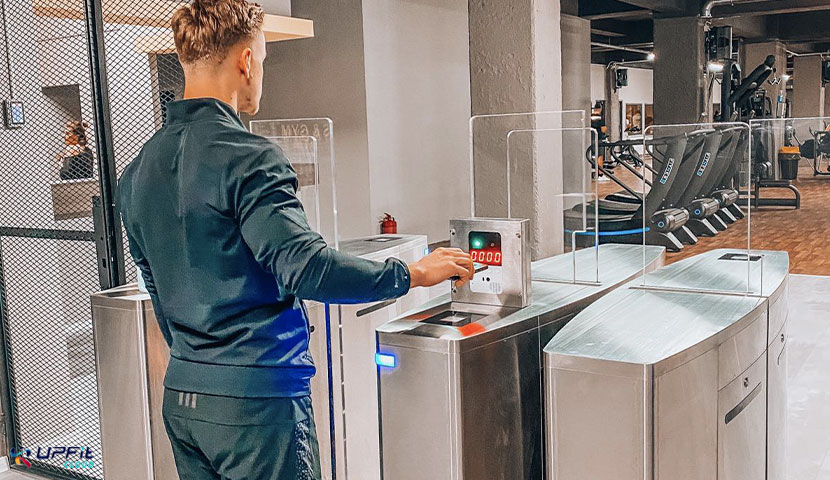
The capital shifts to access. In Gymflow, a new member joins online, the membership activates and gym access is granted. You can see how door access works with a Gymflow membership on our access control page.
Staffed Independent Gym
A staffed open gym of about 5,000 sq ft in England is a different scale. Applying one contractor's advertised rates, fit-out alone runs £150,000 to £275,000 at the basic rate or £275,000 to £450,000 at mid-range.
Add an illustrative £120,000 for equipment, £8,000 for professional fees and £10,000 for launch marketing. The model also carries smaller start-up lines that aren't itemised here, and your marketing strategy decides whether that launch line is enough.
The annual operating subtotal is about £221,236, or £18,436 a month, though its rent and rota aren't itemised. At a £35 monthly fee including VAT, covering that subtotal takes 633 members, before music, finance and payment fees.
Full Health Club
A full health club adds changing rooms, showers and heavier ventilation. One contractor claims £90 to £150 or more per sq ft for a premium fit-out, before you buy a single machine. Business rates sit at the 43.0p multiplier once the RV reaches £51,000.
Funding a New Gym and Building a Profitable Business
A Start Up Loan is a personal, unsecured loan of up to £25,000 per founder, with up to £100,000 per business. From 6 April 2026 the fixed annual rate is 7.5%, as a British Business Bank delivery partner confirms. Over five years, £25,000 at 7.5% costs about £500.95 a month.
Opening and surviving are different things in the fitness industry. Leisure DB, as summarised by Savills, recorded 155 private-sector club openings and 93 closures in 2025. The ukactive and Grant Thornton report puts UK membership at 12.2 million, or 18% of over-16s.
Market growth doesn't make gym ownership profitable on its own, though. PureGym, The Gym Group and JD Gyms own 94% of UK low-cost clubs, and a monthly price below about £30 overlaps the pricing of those chains.
So test your target audience, your gym pricing strategy and your revenue streams, such as classes and training packages, before you commit. A profitable gym needs enough gym members at a price they'll pay, so run that test before the gym launch.
If You're Opening in the US
The build-up method works the same way in the US, but business rates, VAT, the National Living Wage and employer National Insurance are UK rules. Don't convert the UK budgets into dollars.
Rent: CBRE puts the US average retail asking rent at $24.89 per sq ft a year in the third quarter of 2026.
Electricity: the EIA puts the average price to commercial customers at 14.47 cents per kWh in August 2026.
Wages: the federal minimum wage is $7.25 an hour, and 30 states plus Washington, DC set a higher rate.
Payroll taxes: under IRS Topic 751, the employer pays 6.2% Social Security on wages up to $184,500 in 2026, plus 1.45% Medicare with no cap.
Sales tax: New York State doesn't tax fitness club dues but New York City does, so check your state and city.
Music: ASCAP's 2026 rate schedule charges a club with group classes from $545 a year.
Funding: SBA microloans go up to $50,000, and the average is about $13,000.
What Three US Owners Spent
Each is one owner's figures for one site in the year stated, and none is an average or a typical US cost.
Gym Lab Athletics, 2020: Jake Brog started on a credit card, in a 400 to 500 sq ft garage unit at $250 a month, and invested about $15,000 to $20,000. He says himself that units at that rent are rare.
PWRBLD Gym, Pennsylvania, 2024: construction of a unit of about 22,000 sq ft came to about $800,000 all-in, after a first quote of $950,000 that excluded the mezzanine.
Roman Empire Gym, Texas, 2025: George Roman's running total for a new site of 30,000 to 40,000 sq ft was $434,128 for 109 machines, and he said that wasn't yet all the equipment.
FAQ: Gym Startup Costs
Is It Profitable to Open a Gym?
Yes, if your price covers your costs with enough members. Work out your monthly fixed costs and divide by what each member leaves you after VAT and fees. Then check that member count is realistic for your town and your local competition.
Can I Open a Gym With No Money?
Not with no money at all, but you can start your own gym on a small scale. A Start Up Loan lends up to £25,000 per founder at 7.5% from 6 April 2026, and US SBA microloans go up to $50,000. One UK trainer costed a second-hand PT studio set-up at £4,995, though rent and deposit come on top.
What Is the 70/30 Rule in Gym?
There's no standard definition of a 70/30 rule for gym costs, so don't base a budget on it. Build your own split from your real rent, staff and running costs, then test it against your break-even member count before you commit.
How Much Does It Cost to Open a Gym in the UK?
Anything from a few thousand pounds for a second-hand PT studio to several hundred thousand for a staffed gym. Your unit, fit-out and staffing decide where you land, so price each line with quotes before you sign a lease on any gym space.
Cost Your Own Gym Before You Sign
The cost to start a gym comes down to your quotes, not a headline figure. Start with the unit, then price every line above. If you're costing a 24/7 or low-staff model, book a demo and we'll show you how joining, payments and door access run together in Gymflow and the Members App.